
Blood Sugar Stability
Blood Sugar Stability:
The Foundation of Energy, Mood, and Metabolic Health
How stabilizing glucose supports metabolism, hormones, daily energy, and overall well-being.
By Rahvaunia | Wellness with Rah
If your energy feels like a roller coaster — steady one minute, crashing the next — your blood sugar may be involved.
And you’re far from alone.
Blood sugar stability is one of the most overlooked foundations of health. Yet it quietly influences how you feel every single day: your energy, your mood, your cravings, your focus, your metabolism, and — yes — even your sleep.
Most people don’t connect the dots. They blame stress, or age, or just being “that kind of person.” But the truth is, a lot of what we chalk up to just feeling off is actually the body responding to chemistry.
And chemistry?
That, we can work with.
“Balanced blood sugar creates balanced days.”— Rahvaunia | Wellness with Rah
What Blood Sugar Actually Is (And Why It Matters)

Let’s start with the basics — because understanding what’s actually happening in your body is where the magic begins.
Glucose is your body’s main fuel source. Every time you eat carbohydrates — whether that’s a piece of fruit, a bowl of rice, or a slice of cake — your body breaks those carbs down into glucose and releases it into your bloodstream.
As blood sugar rises, your pancreas releases insulin. Insulin is like the key that unlocks your cells and lets glucose in, where it gets converted into energy. Once glucose enters your cells, blood sugar comes back down.
That, in theory, is the system working beautifully.
But here’s where it gets complicated: the type of carbs you eat, how much you eat, when you eat, and what you combine them with all affect how quickly glucose spikes — and how hard it falls.
Glucose itself isn’t the problem. Your body runs on it.
The challenge isn’t glucose — it’s the roller coaster.
What Blood Sugar Swings Feel Like

This is where a lot of readers nod their head and think — oh, that’s me.
Because blood sugar imbalance doesn’t always feel like a “medical issue.”
It often feels like just… your life.
Sound familiar?
•Hitting a wall of fatigue in the late morning or early afternoon
•Needing something sweet after every meal
•Feeling cranky, foggy, or irritable when you haven’t eaten in a while
•Getting shaky or anxious when meals are delayed
•Struggling to concentrate — even when you’ve slept
•Waking up tired even after a full night’s rest
•Feeling hungry again shortly after eating
These aren’t character flaws. They aren’t weakness. They’re symptoms. And once you start seeing them that way, everything shifts.
“Your metabolism loves a consistent rhythm.” — Rahvaunia | Wellness with Rah
The Blood Sugar Roller Coaster

Here’s the cycle that’s working against you — even if you don’t realize it:
•You eat a high-carb or sugary meal
•Your blood sugar spikes rapidly
•Insulin surges to bring it back down
•Blood sugar drops — often lower than where you started
•Your body signals: need fuel, need it now
•Cravings kick in. Fatigue sets in. You reach for another quick hit of carbs.
•And the cycle repeats.
The frustrating part? This can happen multiple times a day. And if it’s been your normal for years, you may not even recognize it as a cycle anymore — you just think that’s how your body works.
It’s not.
Your body isn’t dramatic. It’s responding to chemistry.
Research suggest that many people without diabetes still experience significant blood sugar spikes during a typical day — without knowing it. Glucose levels over 160 mg/dL are considered high — and this happens to people eating what most of us would call “normal food” on a completely average day.
Why Blood Sugar Stability Matters More Than Most People Realize

Blood sugar doesn’t operate in isolation. It’s connected to almost every major system in your body.
Blood sugar doesn’t just affect energy — it ripples through multiple systems in the body.
Hormones
Blood sugar fluctuations directly affect cortisol, estrogen, progesterone, and thyroid function. When blood sugar is unstable, it creates stress on the hormonal system — contributing to PMS, mood swings, and burnout. If you’ve been chasing hormonal balance without addressing blood sugar, you may be missing a foundational piece.
Inflammation
Excess glucose in the bloodstream triggers oxidative stress and inflammation. Over time, that chronic inflammation can contribute to conditions like PCOS, type 2 diabetes, and heart disease. It can also accelerate skin aging by breaking down collagen and elastin — something most people never connect to what they ate for breakfast.
Brain Function
Your brain is one of the biggest consumers of glucose in your body. When blood sugar spikes and crashes, your brain feels it — in the form of brain fog, forgetfulness, difficulty deciding, and low mood. Stable blood sugar means a more stable, clear-headed you.
Metabolism and Weight
When blood sugar is chronically elevated, excess glucose gets stored as fat — particularly around the belly. This is why people can eat “reasonably” and still struggle with weight. It’s not just about calories. It’s about chemistry.
Gut Health
Blood sugar instability can disrupt the gut microbiome, and an imbalanced gut can worsen blood sugar regulation. It’s a two-way relationship — and one of the reasons root-cause wellness looks at the whole picture.
“Blood sugar stability is quiet luxury for the body.” — Rahvaunia | Wellness with Rah
Why Skipping Meals Often Backfires

Let’s talk about something that comes up all the time in wellness spaces: skipping meals as a form of discipline.
For some people, intermittent fasting works well — when done intentionally, with a solid foundation in place.
But for a lot of people, skipping meals without that foundation creates more stress on the body, not less.
Here’s what actually happens when you go too long without eating:
•Blood sugar drops
•Your body interprets this as a stress signal and releases cortisol
•Cortisol raises blood sugar — but also increases fat storage and promotes cravings
•By the time you do eat, you’re likely reaching for fast, high-carb fuel
•And the spike-crash cycle kicks right back in
“Skipping meals isn’t discipline. It’s stress for the body.” — Rahvaunia | Wellness with Rah
This isn’t true for everyone in every season. But if you’re chronically exhausted, experiencing hormonal symptoms, or stuck in a craving cycle — skipping meals may be adding fuel to the fire.
“Sometimes the most radical thing you can do for your health… Eat a real lunch.” — Rahvaunia | Wellness with Rah
Foundations of Stable Blood Sugar
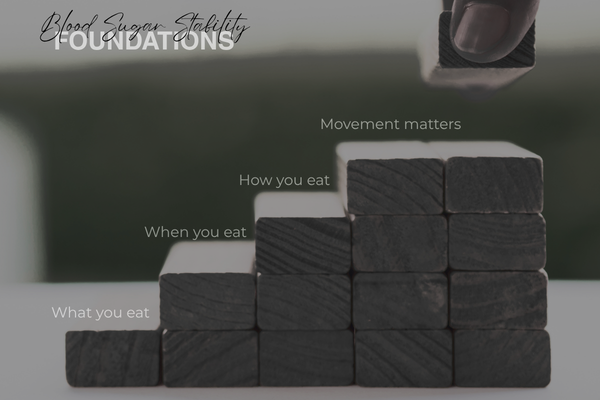
Here’s what I want you to know: blood sugar stability isn’t complicated. But it is layered. And the strategies that actually work aren’t about restriction — they’re about rhythm.
A few foundational principles to start with:
What you eat matters. Pairing carbohydrates with protein and healthy fat changes how your body processes glucose. This is one of the simplest, most impactful shifts you can make.
When you eat matters. Regular, consistent nourishment supports your metabolic rhythm. Going too long between meals often works against you.
How you eat matters. Meal order, stress at mealtime, how quickly you eat — these factors affect your glucose response more than most people realize.
Movement matters. Your muscles are glucose sponges. Even light movement after meals makes a measurable difference.
Beyond these foundations, there are specific strategies — simple, practical, and research-backed — that go deeper into how to apply these principles in real life.
Want the full breakdown?
The Blood Sugar Stability Companion Guide walks you through each of these strategies in detail — with practical tools you can start using the same day. It’s part of the Blood Sugar – The Stability Energy Blueprint Bundle, available HERE.
“The more we know, the more we glow.” — Rahvaunia | Wellness with Rah
Simple Signs Your Blood Sugar Is Stabilizing
When blood sugar starts to regulate, the shift is usually subtle — but unmistakable once you notice it.
•Energy that carries you through the morning without needing coffee or a snack
•Fewer cravings — especially for sweets in the afternoon
•Better focus and mental clarity
•Mood that feels more… even
•Less anxiety or irritability between meals
•Hunger that comes on gradually, not urgently
•Waking up rested instead of groggy
It doesn’t happen overnight. But it does happen. And when it does, your body begins to feel different.
Not wired. Not crashing. Just stable.
That steadiness is available to you. It starts with the rhythms.
Blood Sugar and Root-Cause Wellness

In root-cause wellness, blood sugar stability is often one of the first places we explore — because it touches so many other symptoms.
Fatigue, hormone imbalances, weight that won’t move, inflammation, brain fog — these aren’t always separate issues. They often share a common thread. And that thread frequently runs through metabolic health.
When we look at someone’s health from a root-cause lens, we’re not just treating the symptom in front of us. We’re looking for the pattern underneath. Blood sugar is often part of that pattern.
“Stability first. Everything else after.” — Rahvaunia | Wellness with Rah
When Blood Sugar Support May Be Needed
Sometimes, making foundational changes on your own is enough to shift how you feel. But other times, deeper support is needed.
Consider reaching out for more personalized guidance if you’re experiencing:
•Persistent, unexplained fatigue despite sleeping enough
•Hormonal symptoms that aren’t responding to lifestyle changes
•A craving or binge cycle that feels out of your control
•Difficulty with weight or unexpected gain around the belly
•Blood sugar readings in the pre-diabetic range
•Signs of metabolic syndrome or PCOS
These experiences deserve a thoughtful, individualized approach — not another one-size-fits-all plan.
Where to Start
If all of this feels like a lot, take a breath. You don’t have to overhaul your life this week.

Here’s a simple starting point:
Eat breakfast within 1–2 hours of waking — and make it balanced
Pair every carb with a protein and a fat
Take a short walk after your largest meal of the day
Notice your energy between meals — without judgment, just curiosity
Add more fiber-rich vegetables to one meal a day
That’s it. Start there. Watch what shifts.
“The goal isn’t perfection. The goal is rhythm.” — Rahvaunia | Wellness with Rah
Ready to Go Deeper?
If this resonated with you, I created two resources built around exactly this:
Blood Sugar – The Stable Energy Blueprint (Recipe Bundle)
30 balanced breakfast, lunch, and dinner recipes — each designed to reduce spikes, support steady energy, and help your body function the way it was designed to.
Blood Sugar Stability Companion Guide
Simple, practical strategies for balancing glucose, improving energy, and supporting your metabolic rhythm — delivered in a format you’ll actually use.
Both are available at WellnessWithRah.com.
Want a Personalized Roadmap?
Blood sugar stability is often one of the first places we start when exploring root causes of fatigue, inflammation, and hormone imbalance.
Inside the R.O.O.T.S. program, we look at your patterns — nutrition, stress, sleep, and metabolism — and build a strategy that supports long-term stability. Not a generic plan. Yours.
Learn more at WellnessWithRah.com
“Life is... let’s THRIVE.” — Rahvaunia | Wellness with Rah
Final Thoughts
When blood sugar stabilizes, the body begins to feel different.
Energy steadies. Cravings quiet. Mood evens out.
It’s not dramatic — it’s foundational.
And sometimes the most powerful changes in health start with something surprisingly simple: supporting the rhythms your body has been asking for all along.
You’ve got this. And if you need support along the way — I’m here.
In support of your next chapter of health,
Rah 🌿
Certified Functional Nutritionist | Wellness with Rah